Trading education · Broker checks
How to Check a Forex Broker’s Regulation
Check a forex broker’s legal entity, permissions and contact details using official regulator records. Work through a fictional clone-firm example.
In this lesson
- Distinguish a brand from the legal entity offering an account.
- Use an official record to check permissions and detect mismatched contact details.
Course outline
The complete course
8 modules. One clear path.
Follow the lessons in order, or return to a topic when you need it. Every lesson is open.
01Forex trading fundamentals10 lessons · Not started
Check brokers, rehearse a demo workflow, then study quotes, orders, costs, exposure and the demands of a trading day.
- Forex trading for beginnersNot studied
- How to Check a Forex Broker’s RegulationNot studied
- How to Use a Forex Demo AccountNot studied
- Forex order typesNot studied
- How to Place, Manage and Close a Forex TradeNot studied
- Spreads, slippage and swapsNot studied
- Margin and leverageNot studied
- Margin calls and stop-outsNot studied
- Day trading, swing trading and scalpingNot studied
- Forex market hoursNot studied
02Position sizing and risk management7 lessons · Not started
Connect price distances, contract assumptions and combined currency exposure to cash risk, payoff and drawdown.
- Stop-loss distances in pipsNot studied
- EUR/USD position sizingNot studied
- JPY pip valuesNot studied
- Position sizing with trading costsNot studied
- Forex Correlation and Combined Currency ExposureNot studied
- Risk-reward ratiosNot studied
- Drawdown and recoveryNot studied
03Price action and chart patterns5 lessons · Not started
Work from completed observations to candles, zones, multiple timeframes and clearly stated pattern boundaries.
- Price action tradingNot studied
- Candlestick patternsNot studied
- Support and resistanceNot studied
- Multiple Timeframe Analysis in ForexNot studied
- Chart patternsNot studied
04Trading indicators3 lessons · Not started
Study what moving averages, RSI and MACD calculate before interpreting a signal.
- Moving averages: EMA and SMANot studied
- RSI indicatorNot studied
- MACD indicatorNot studied
05Gold trading and XAU/USD4 lessons · Not started
Identify the product, translate lots into ounces and work through results and position sizing.
- Gold trading for beginnersNot studied
- Gold contract sizes and lot sizesNot studied
- Gold profit and lossNot studied
- Gold position sizingNot studied
06Economic indicators and central banks9 lessons · Not started
Read currency drivers, inflation, growth and policy announcements with their expectations and revisions.
- Central banks and currency pricesNot studied
- Nonfarm payrolls (NFP)Not studied
- CPI inflationNot studied
- PCE inflationNot studied
- GDP growth and revisionsNot studied
- PMI explainedNot studied
- Retail sales explainedNot studied
- Central bank decisionsNot studied
- FOMC meetingsNot studied
07Forex strategies and backtesting5 lessons · Not started
Define a reproducible study, audit its assumptions and work through breakout, trend and range examples.
- Forex trading strategiesNot studied
- Backtesting trading strategiesNot studied
- Breakout trading strategiesNot studied
- Trend-following strategiesNot studied
- Range trading strategiesNot studied
08Trading psychology and signals2 lessons · Not started
Review the process behind a result and the records needed to assess a performance claim.
- Trading psychologyNot studied
- Forex signals explainedNot studied
The short answer
Start with the legal entity that would hold your account. Independently find its regulator’s record, confirm the relevant permissions and compare the website and contact details. A copied licence number, company registration or familiar platform is not enough.
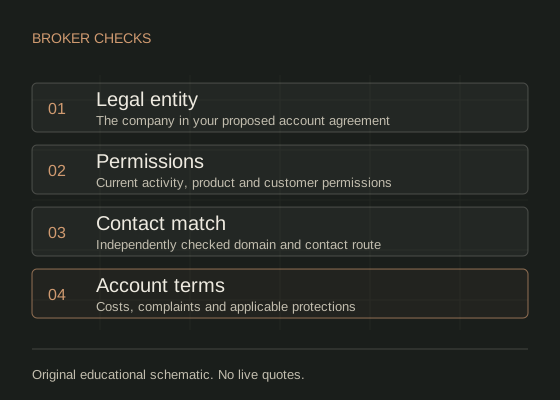
Identify the company behind the account.
A brand can operate through several companies in different jurisdictions. The name in the proposed client agreement matters more than a group logo. Record the full legal name, licence or registration identifier, proposed account type and the jurisdiction serving your country of residence.
Keep three questions separate: does the company exist; may it provide this particular service to this type of customer; and are you actually communicating with that company? A business-registration certificate addresses the first question. It does not settle the other two.
Read the terms before depositing. Note the contracting entity, complaints route, client-money wording and any protection that specifically applies to that entity and account. Do not assume that protections offered by one group company apply worldwide.
Use the relevant official records.
Open the regulator’s website independently. Do not rely on a screenshot, badge or register link supplied in an unsolicited message.
| Jurisdiction | Starting point | What to investigate |
|---|---|---|
| United Kingdom | FCA: Firm Checker and checking a financial firm | The exact firm, activity and contact details; use the FCA’s detailed register when further permission information is needed. |
| United States | CFTC: check registration and backgrounds before trading and NFA: Background Affiliation Status Information Center (BASIC) | Relevant CFTC registration, NFA membership and available disciplinary or background records. |
| Australia | ASIC Moneysmart: check before you invest | Relevant financial-services licence or authorised representative details, permissions and the identity of the provider. |
These are examples, not an exhaustive global list. For another country, begin with its financial regulator. The required permissions and available protections depend on location, product and customer classification. A foreign registration alone does not establish permission to serve you.
Work through a fictional mismatch.
Fictional exercise: a message claims to represent “Harbour Example Markets Ltd”. Its identifier matches an entry you found, but its website and telephone number differ. No firm in this example is real.
| Evidence | Official record | Message received |
|---|---|---|
| Legal name | Harbour Example Markets Ltd | Harbour Example Markets Ltd |
| Identifier | EXAMPLE-123 | EXAMPLE-123 |
| Website | harbour.example | harbour-access.example |
| Contact route | The contact route in the official record | A number supplied in the message |
The matching name and identifier do not resolve the mismatch. Stop the onboarding process and use the independently obtained official contact route to verify it. Do not send identity documents or money to the unverified contact. The FCA: matching contact details and avoiding clone firms explains why scammers copying genuine firm details remain a risk.
A warning-list search with no result is not positive approval: a new or unreported impersonation may not appear there. An attractive demo interface or successful small withdrawal also does not answer the identity question.
Check the offer after checking the identity.
For the verified entity, obtain the current product specification and execution policy. Compare the quoted contract size, minimum volume, margin requirement, stop-out rules, spreads, commissions, overnight charges and withdrawal terms. Keep copies with a date so changes can be identified.
Ask which costs can vary and where each is disclosed. A low headline spread can coexist with commission and financing. An account described as “professional” may have different protections; the label is not an achievement to pursue without understanding those differences.
Registration is not a promise of investment returns. Be wary of guaranteed profits, pressure to deposit immediately, unexplained payment destinations, remote-access requests and demands for a further payment to release a withdrawal. Check the claims with the regulator or firm through an independent route.
Build a dated evidence sheet.
- Write the exact account provider and proposed product.
- Record the official source URL, identifier, status, permissions and date checked.
- Compare the domain and contact route with the official record.
- List unresolved questions about eligibility, costs, complaints and protections.
- Record your decision and the evidence still missing. “Do not proceed” is a valid outcome.
This is a checking exercise, not a broker recommendation. InsomniCapital’s affiliate relationship must not replace your own checks.
Common questions.
Does a regulated parent company cover every subsidiary?
No. Identify the legal entity in your own agreement and check its permissions and applicable protections. A group-level claim is insufficient.
Is a broker listed in MetaTrader automatically approved?
No. Trading software and financial authorisation answer different questions. Check the actual account provider with the relevant regulator.
Does authorisation prevent trading losses?
No. Authorisation does not guarantee returns or prevent market losses. The available complaints and compensation arrangements also have eligibility conditions.
Sources & assumptions.
Prepared by InsomniCapital. Sources checked on . The workflows, fictional entities, diagrams and numerical examples are original teaching illustrations. They are not reported trades, current quotes or a tested strategy. Product and platform conditions vary.
- FCA: Firm Checker and checking a financial firm
- FCA: matching contact details and avoiding clone firms
- CFTC: check registration and backgrounds before trading
- NFA: Background Affiliation Status Information Center (BASIC)
- ASIC Moneysmart: check before you invest
- CFTC: eight things to know before trading OTC forex
Educational information, not personalised investment advice. Leveraged trading carries a high risk of loss. InsomniCapital has an Axi affiliate relationship and may receive referral compensation. Sources are not endorsements of this guide. Read our risk disclosure and editorial standards.
Lesson 2 checkpoint
Put the reading into practice
Work it through
Use the fictional comparison in this lesson to write a stop-or-continue decision. Then make an evidence sheet with the entity, jurisdiction, permissions, official contact route and date checked; do not send money as part of the exercise.
The checkbox records study; answering every checkpoint question correctly records a separate pass. Try the module assessment for a mixed question set. Read the evidence standards for how examples and claims are presented.